
Houston Graphic Designer, Creative, & Maker
As a Houston-based graphic designer, I've always found joy in creating beyond the screen. Entwining and dabbling in many forms of expression — graphic design, writing, arts and crafts, sewing, baking, cake and cupcake decorating — creativity has always been the thread that runs through everything I do.
Handmade — Creating Crafts & Cherished Memories with your little ones
Creating my children's party decor became one of my favorite ways to celebrate them — personalizing every detail with their name, crafting things by hand, and turning the whole process into a memory in itself.
I couldn't always find exactly what I was looking for, and when buying wasn't affordable, I did what felt natural: I handmade it myself.
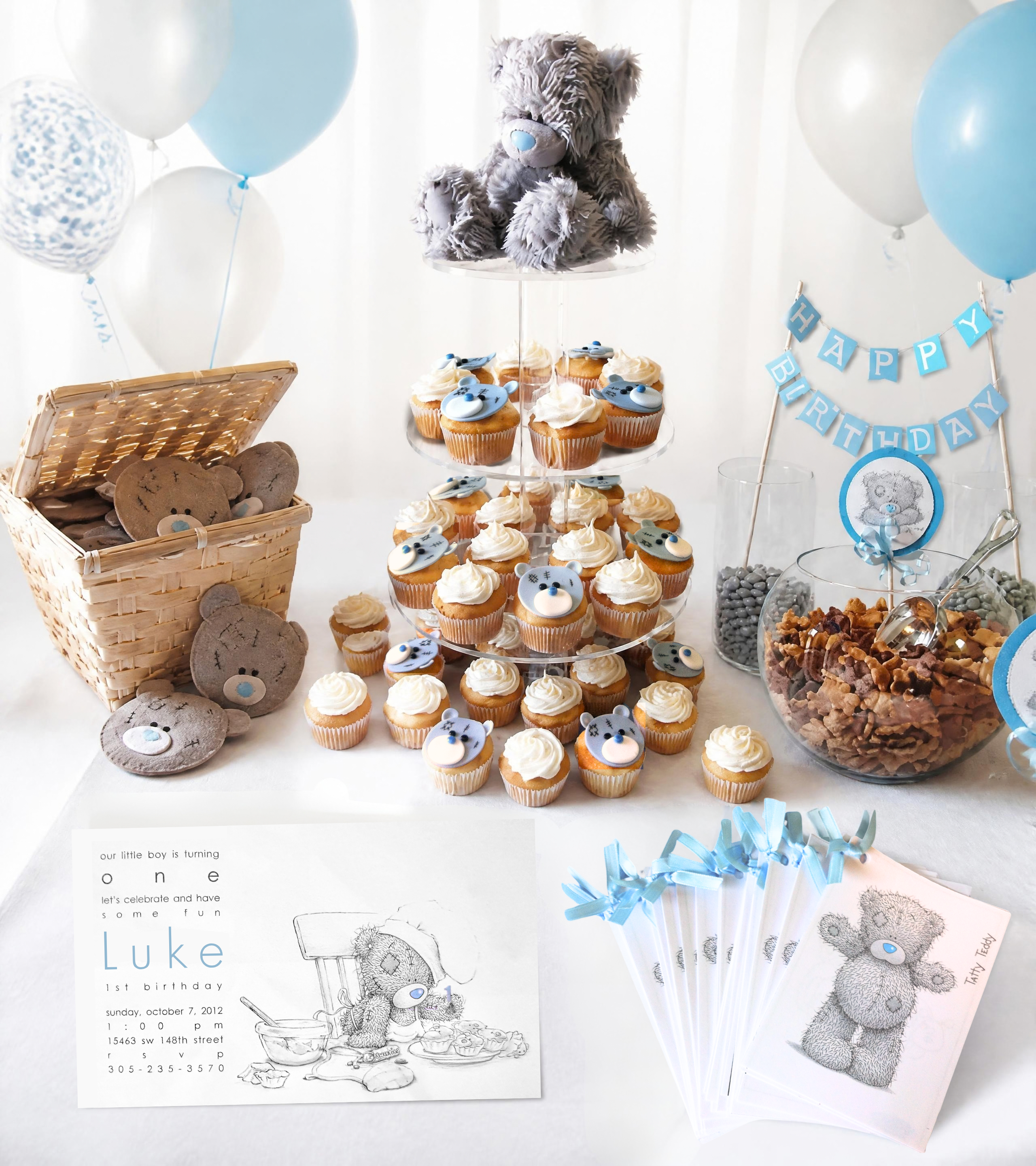
For my little one's first birthday, I designed and handcrafted everything around the most adorable little bear — Tatty Teddy™. A quick note: I did not create the Tatty Teddy™ character illustrations. All of the birthday party decor was designed and built around this beloved character, purely for personal use.
The Invitations and Coloring Books
The invitations and coloring book layouts were designed in Photoshop. I kept the design clean and sweet — personalizing each one with my son's name and party details. Once the layouts were finalized, I printed everything at home and cut each piece out by hand. The coloring books got a little extra love: each one was tied with a soft satin blue bow, making them a keepsake as much as an activity.
If you want to try something similar, the process is simpler than it sounds. Start with a clean document in Photoshop, set your dimensions to match your paper size, and build your layout using text layers and artwork. Print on cardstock for best results, and take your time with the cutting — a paper trimmer makes clean edges much easier.
The Tatty Teddy Cupcakes
My little one and I baked and decorated every single cupcake together. We molded all of the cupcake toppers out of fondant and painted each teddy's little facial details by hand. It was fun, sweet work — and one of my favorite memories from that whole day.
The Tatty Teddy Favors
This was truly a family effort. My mother and I sewed all of the felt teddy bears by hand and hand-embroidered every facial detail. There is something irreplaceable about something made stitch by stitch, and I love that my little one has those bears as a keepsake from his very first birthday.
A Celebration Handmade with Love
Crafting each invitation by hand, painting the delicate fondant bears, and carefully stitching those sweet little felt teddies — every handmade detail was created with love, coming together to form cherished family memories that weave into our story for years to come.
Disclaimer: The graphic designs and products featured in this post were created for personal use only. Any designs shown are not available for sale. Licensed Tatty Teddy™ artwork, all rights reserved.
Tools and resources used: Adobe Photoshop for invitation and coloring book layout design. Learn more about Tatty Teddy™ at the official Me to You Bears website.
The Magnolia Botanical Illustration
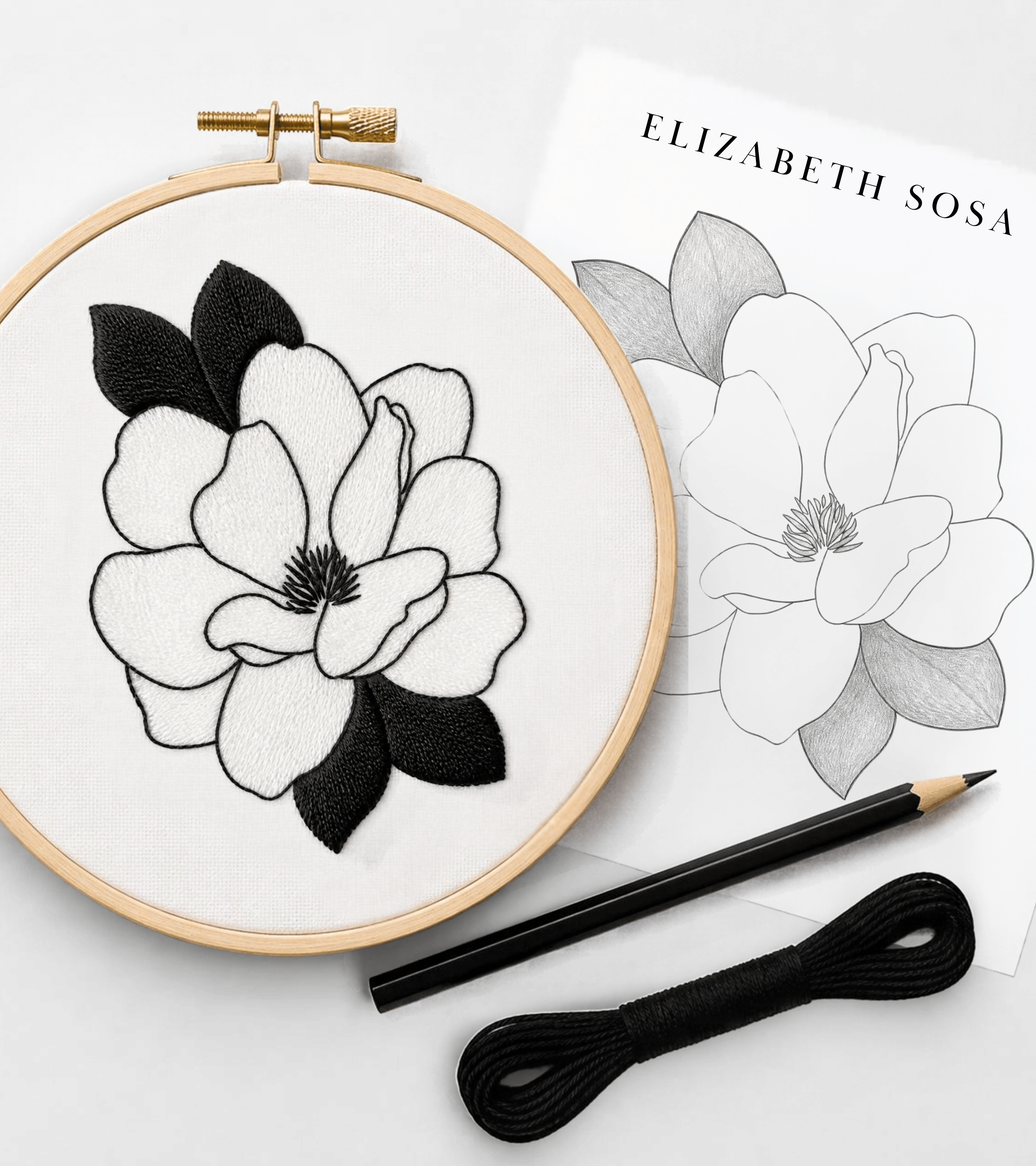
A delicate botanical handmade magnolia illustration, the whimsical illustration was inspired by the beauty and resilience of the Magnolia — its large and lovely flower blooms and the earthiness of this timeless garden creature. There is something quietly powerful about the magnolia that has always drawn me in, and I knew I wanted to capture that in a piece that felt both refined and organic.
About the Magnolia Flower
The magnolia is one of the oldest flowering plants on earth, with fossils dating back over 95 million years. With its beautiful large blooms that appear in shades of white, cream, blush, and deep rose, —so quietly commanding making it one of the most dramatic and striking flowers in any garden. The magnolia blooms so beautifully — and then it is gone so quickly, like the time we have on this earth. In the American South, it is a symbol of strength, perseverance, and enduring beauty.
Houston Graphic Designer on Creating Botanical Line Art
As a Houston-based graphic designer, I am constantly inspired by the natural world around me — the lush gardens, the warm light, and the rich botanical heritage of the South. My creative life has always been a little tangled and wonderfully so, entwining art and illustration, writing, product design, and the quiet art of gardening. I enjoy playing around in my garden like a little garden fairy — there is something about being in nature and the energy it brings. I love creating botanical illustrations and the magnolia with its timeless beauty felt like a natural subject, I wanted to create something that honored the flower’s elegance without overcomplicating it.
Designed in Adobe Illustrator
The magnolia line art illustration was created in Adobe Illustrator, using simple geometric shapes as the foundation. I began by sketching the basic petal forms — each one built from overlapping ellipses and anchor-point curves — then refined the outlines to give them that soft, hand-drawn quality. The leaves were constructed the same way, using bold filled shapes to create contrast against the delicate open petals. Working with the Pen tool and the Pathfinder panel, I layered each element carefully, adjusting stroke weights to give the illustration depth and dimension. The result is a clean, minimal line art piece that feels both modern and timeless — the kind of illustration that translates beautifully across products and surfaces.
From Illustration to Product Design — Ideas Come to Life
The magnolia embroidery kit image featured in this creative journal post is a wonderful example of how a graphic designer’s product idea can come to life using AI tools. I created this mockup in Canva using Canva’s AI tools and simple design prompts. The result — an embroidery hoop with the magnolia stitched in black thread, paired with my line art sketch — is my illustration as a product idea come to life.
At the moment, the actual embroidery kit is not available for purchase, but I hope to produce this product in the near future. However, the illustration alone is available for sale in my handmade shop.
Shop the Magnolia Collection
In addition to the standalone botanical illustration, the magnolia design is also available on a growing collection of products — from fine art prints, canvas tote bags, and other travel accessories, to beach and kitchen towels, calendars, coffee mugs, graphic tees, journals, pillows, postcards, and yoga mats.
The Magnolia Fine Art Print and Magnolia collection pieces are available for purchase in my shop — you can bring home one or all of these beautiful pieces and add a touch of botanical elegance to your everyday life. Shop the Magnolia Collection
This collection was designed entirely from scratch in Adobe Illustrator — my go-to tool for bringing detailed illustration work to life.
The featured image was created in Canva — my go-to tool for creating quick mockups and bringing product ideas to life.
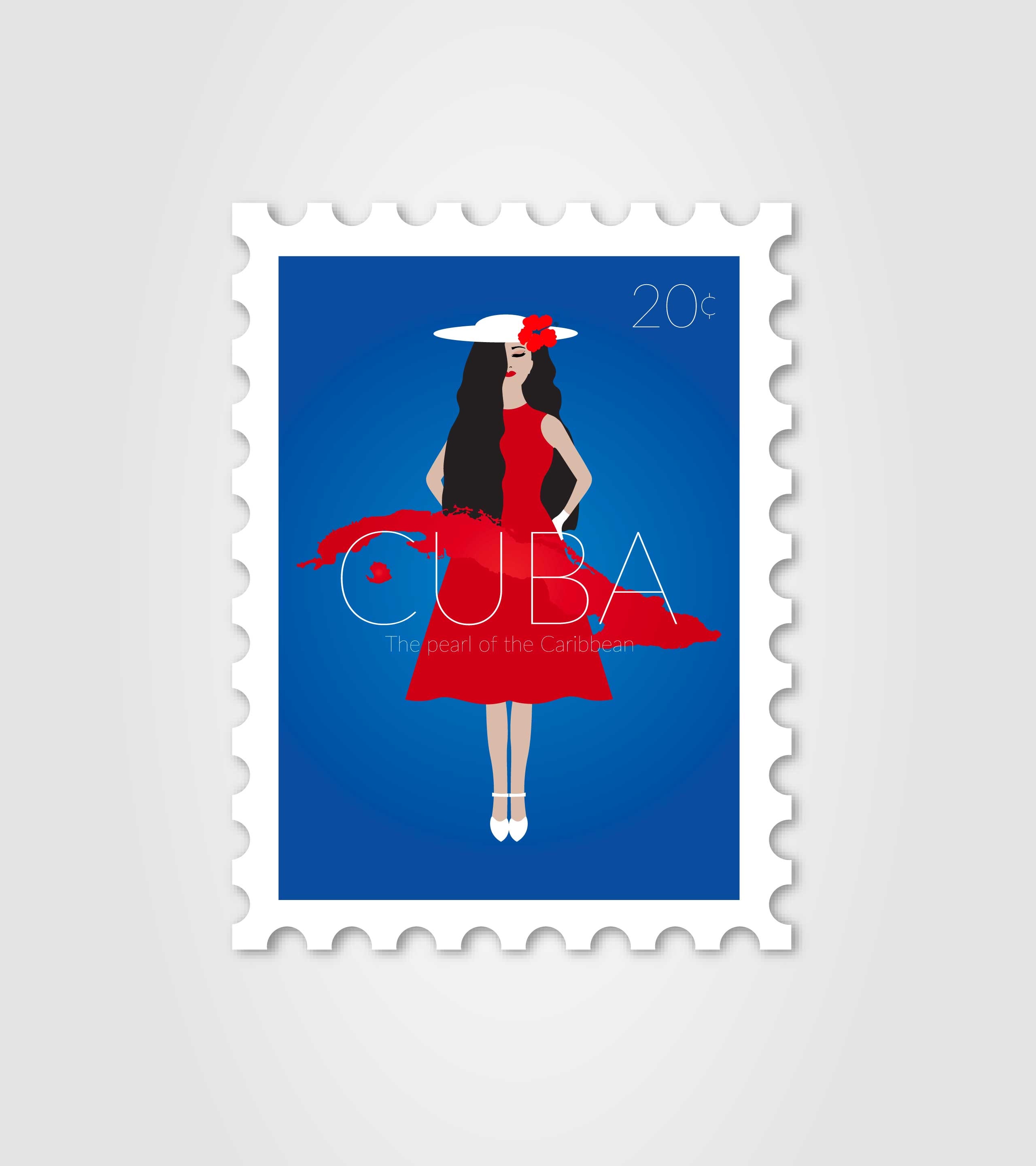
To celebrate National Hispanic Heritage Month, I created the Cubana Stamp Collection — a tribute to the beauty of Cuban culture, the women who carry it, and the nostalgic charm of vintage postage stamps. Cuba has always held a special place in my heart, and I wanted to share some interesting and fun facts about the island along the way.
Houston Graphic Designer on Celebrating Cuban Culture Through Illustration
Cuba is a place of extraordinary beauty, resilience, and artistry — with the Cubana Stamp Collection, I wanted to share a little bit of Cuba — through a medium as timeless as the island. As a Houston graphic designer with Cuban roots, this illustration is me celebrating my culture. I wanted to honor the strong Cuban women, their cultural fashions and the spirit of the island.
A Few Fun Facts About Cuba
- Cuba is the largest island in the Caribbean Sea and the Atlantic Ocean.
- Cuba is home to some of the most beautiful beaches and coastlines in the world.
- Cuba was once one of the largest exporters of cane sugar.
- Cuban cigars are widely regarded as the finest in the world.
- Baseball and dominoes are beloved pastimes of the Cuban people.
- Cuba is home to the world's smallest bird — the bee hummingbird.
- Rumba, mambo, and cha-cha-chá all originated in Cuba.
- Cubans love their coffee, "Cafecito" strong and their Cuban pastries sweet.
The Cubana Stamp Collection
Growing up, I remember my parents receiving letters and postcards from family in Cuba. We always looked forward to reading their letters, and I loved admiring the postcards and postage stamps that arrived with them. That memory stayed with me, and it became the heart of this project.
The Cubana Stamp Collection was inspired by the beauty and strength of the Cuban woman, the richness of Cuban culture, and the nostalgia of Cuba's 1950s vintage fashion.
The stamps feature seven Cubana doll illustrations, each dressed in Cuban-inspired fashions from the 1950s era — traditional folk skirts, salsa dancer outfits, beautiful botanical fan headwear adorned with hibiscus flowers (similar to the Chinese hibiscus native to Cuba), and hats inspired by those worn by Cuban women throughout history.
I used the bold reds and blues of the Cuban flag to create one cohesive, aesthetically pleasing color palette. The illustrations were created in Adobe Illustrator using simple shapes to form the dolls, clothing designs, flowers, and stamp frames.
Shop the Collection
The Cubana illustrations are available for purchase in my shop — you can bring home one or all of these pretty little Cuban dolls. Whether you love art prints or want to carry a piece of Cuban culture with you, there is something for everyone. Shop the Cubana Stamp Collection.
To see more images and learn more about the project, view the Cubana Stamp Collection.
This collection was designed entirely in Adobe Illustrator — my go-to tool for bringing detailed illustration work to life.
Hello my name is Elizabeth Sosa, welcome to my creative journal — a place where design meets storytelling, and where I share ideas, what I create, and inspirations behind my work. I am a professional website designer, graphic designer and illustrator.
Houston Website Designer & Freelance Graphic Designer
A little about me, I am a freelance designer based in Houston, Texas. I offer website design and graphic design services. I create organic and cohesive brand aesthetics and visual communication for brands, from friendly user experience website designs, custom graphic designs, to illustrations and more.
This is my first blog post, I am not a professional content writer. The purpose of this journal and my intentions for this blog is to share my thoughts, insight and creative work with readers.
I have completely re-designed my portfolio website.
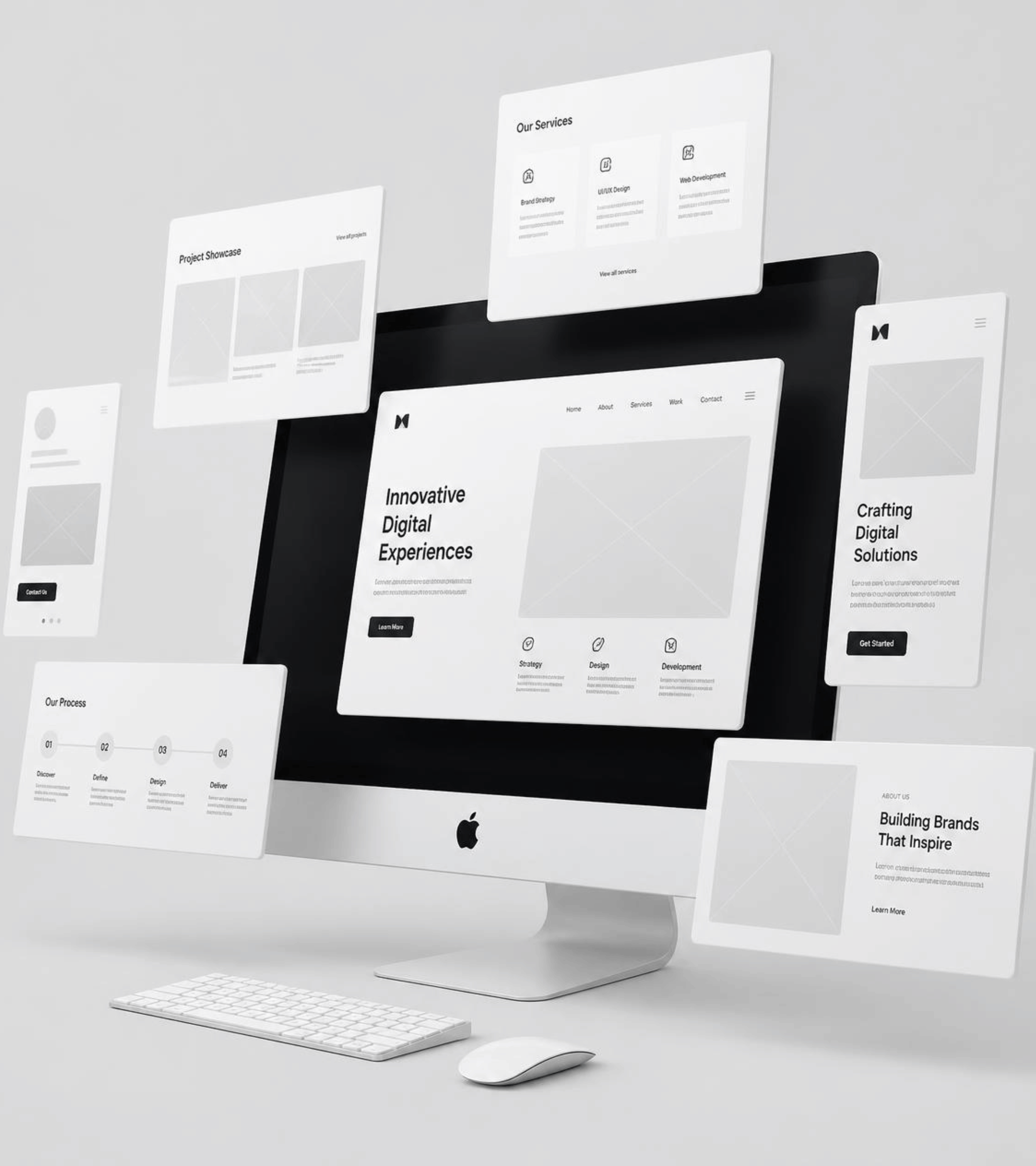
This website was built completely from scratch, it's not a template, it is a custom website design. I designed the site layout, selected every photo, and wrote most of the words you are reading with the assistance of AI tools such as GoDaddy’s Airo and Google’s Gemini to create a user-friendly portfolio website where I can showcase my work.
Although I am a junior developer and am able to do most of the website development myself, I had a little help from AI assistance. My new website is powered by GoDaddy website hosting services and is built using GoDaddy’s Airo website builder platform, which is amazing I might add and simple to work with.
On my site, you will find my portfolio which contains conceptual and client projects that I have designed to showcase my creative work and build up my clientele. I added a shop in order to sell my artwork. In my shop you can purchase my handmade goods right on my website, from digital downloads to physical products. And, included this journal as a creative outlet and content builder in my design.
What to expect. Here you’ll find both ai and organic articles about website design, graphic design and illustrations, compiled of my recent design projects, artwork, I will share insight about the creative design process, design tutorials, marketing tips, how to’s, design resources and freebies for the intention of community, collaboration, education and inspiration.
Thank you for taking the time to read my journal. I hope you enjoy reading my words. I hope my artwork makes you happy, I hope to be a muse to your own creativity.
Please, keep reading to learn more about my creative design services and along the way you’ll get to know a little more about me as a creative. Thanks again, for supporting me as an artist in my ever blooming boutique creative company.
If you are a website designer looking for a smarter way to build, try Airo by GoDaddy — Airo makes it possible.
White space is not wasted space — it is the pause that gives the eye somewhere to rest, and the mind somewhere to land. As a graphic designer and website designer, restraint is one of the most deliberate choices creatives have to make.
Houston Graphic Designer on Why Less Is More
The art of restraint in visual design is to resist the urge to fill all the spaces, to know that the silence can carry just as much as the sound.
In visual design, restraint is not absence — it is intention made visible. Less is more and more is well, just more.
Simplicity in Visual Design
A simple layout doesn’t mean it lacks substance. We often think more color, more images, more type. Adding more elements to the composition simply makes it feel cluttered.
The work I admired most and the brands that caught my eye were not the loudest ones. They were the silent ones that made simple, clear choices — and told the story without a lot of noise.
The Discipline of Subtraction
I am a minimalist at heart. Restraint in design is not minimalism. It is the discipline of asking: Does this element earn its place? Does it serve a purpose? Does it convey the message, or does it dilute it? When you remove what is unnecessary, what remains is the necessary.
A single well-chosen typeface that’s easy to read, conveys the message clearly. A single thoughtfully curated photograph visually communicates the message without a single typed word.
Restraint requires confidence. It requires trusting that your audience will meet you halfway — that they do not need everything spelled out, that they are capable of knowing what was not said. It also requires a clear point of view. You cannot subtract without knowing what to keep.
The Edit
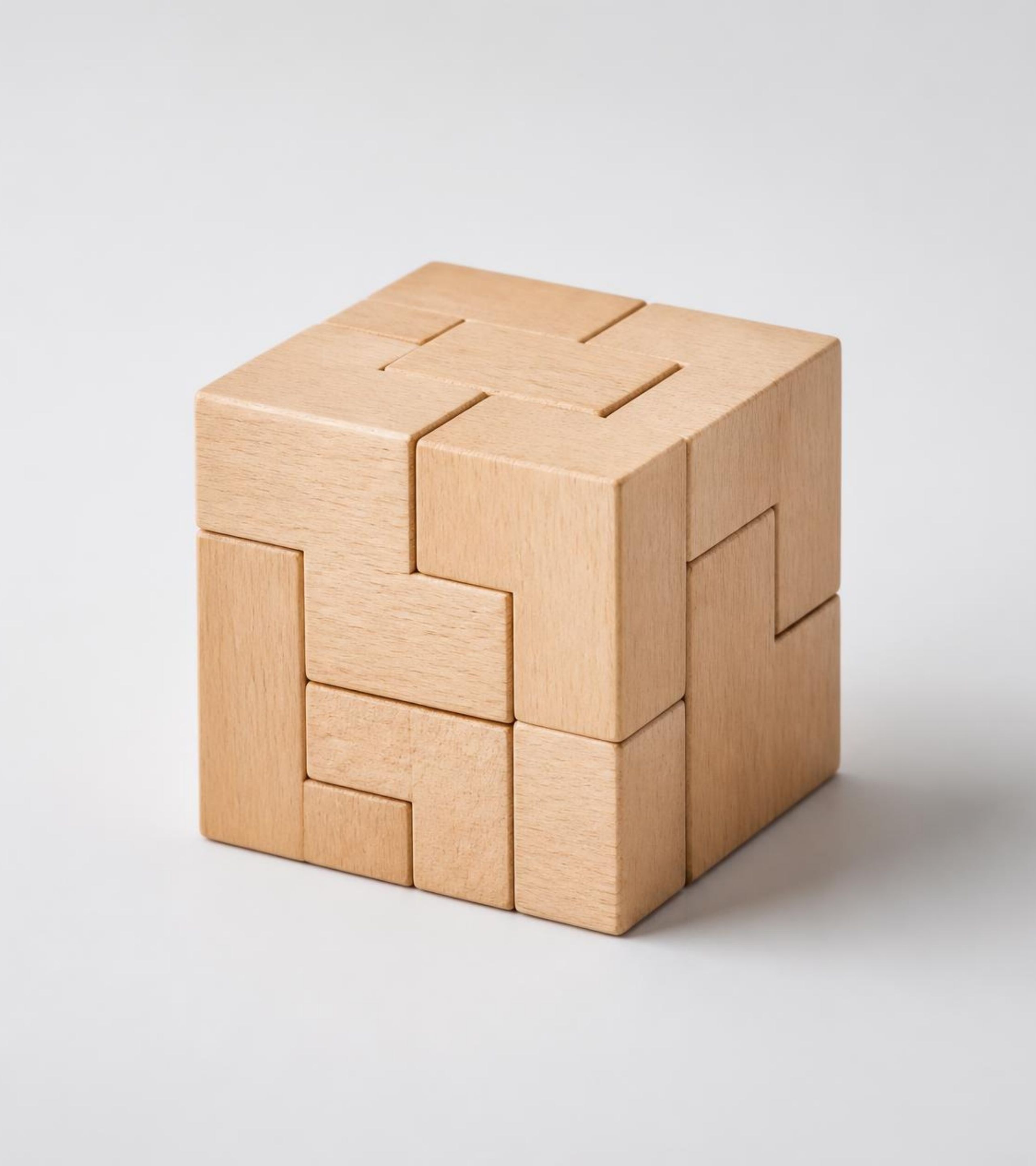
The edit is like putting all of the pieces of the puzzle together — each piece must fit perfectly. The most impactful creative decisions I have made were not the things I added. They were the things I chose not to. The silence I left for the audience to hear without a single sound.
Its possible to make a loud noise without sound. Learn to enjoy the sounds of silence.
The work in my portfolio reflects this same discipline — every element earning its place.
Photography communicates the message before a single word is read. It sets a tone for what's to come and it creates a world for your audience to visualize.
From the thoughtfully curated stock photo to the elaborate photoshoot session with a photographer — photography is one of the most powerful elements in visual design that a brand has.
Houston Graphic Designer on Why Photography Is Your Brand’s First Impression
When the photography is working, the audience feels it immediately. When it is not, the audience knows that something feels off — without even understanding or knowing why.
You may look at an outdated website that has poor quality images and say "Oh, that ugly website just needs better photos." Although, in some cases that may be true. But more often, the problem is not the photographs themselves — it is the absence of a clear intention behind them.
The Stock Photo Myth
There is nothing wrong with using stock photography in your design. I have seen brands build entire visual identities from stock photography — and do it beautifully. The difference is the curation. Every single image was chosen because it reflected something true about the brand: its values, its aesthetic, its audience. The photography had an organic flow to them, the images felt like they belonged together, like they were made especially for the brand.
Curating with Intention
Whether using custom photography or selecting from a library of stock photos, the question is the same: what do you want your audience to feel? What visual message are you trying to send them?
Intention shapes all things — the light or dark aesthetic you choose, the subjects you include, the moments that the photographer captures.
The choice you make when curating photography for your project, determines whether your images feel aspirational or approachable, editorial or documentary, independent or corporate.
Before you open your assets folder, or search hours through stock photos, or brief a photographer, organize your ideas on paper or device, gather your thoughts and intention. Once you are clear on the feeling behind the photography. The images will flow naturally.
Question Every Choice
When evaluating photography for a brand, I ask myself 3 simple questions.
- Does the image feel like it belongs, is it cohesive with the brand?
- Does it grab the attention of the audience we are speaking to?
- Does it visually tell the brand's story, and give the audience a look into the brands world?
If the answer to any of these questions is no, the problem is not the photo. It is the brief.
The photography used on my site were curated from stock photos and some were created with Ai assistance. What does the photography on my website say about me, my aesthetic, does it speak to you?
The work in my portfolio reflects these same standards — every image chosen with intention.
The advice you hear most often from other creatives is that you must create every day. As a website designer and graphic designer, I get that. Be consistent. And, the man tells you to post consistently — you must feed the monster.
Houston Graphic Designer on the Integrity of Your Creative Work
There is truth in that about creative work — practice matters, repetition builds skill, and showing up when you do not feel like it is part of the work.
I believe that consistency is not only about frequency. It is about integrity. It is about sharing something worth sharing, even if that means sharing less often — but with more substance.
The Pressure of the Machine
We live in a culture that craves excess. More posts, more reels, more content, more work. The algorithm favors frequency. The feed moves fast, you need to keep up. The pressure to produce is constant.
The simple act of being busy does not necessarily mean you are being productive. I've made things quickly and moved on to the next project, it's just what you have to do when working in a fast-paced environment. Some of it was good. A lot of it was noise and felt rushed to me.
You have to stop and take a moment to ask yourself: What am I making it for? Is it going to elevate my brand?
Depth Over Volume
A creative practice that lasts is not built on how much you can produce or fast you can produce it. It is built on curiosity — a willingness to develop an idea without taking the easy route, to take your time to perfect it until it becomes what it is meant to be.
This practice takes time. It takes patience. Dedicating time to the work and nurturing yourself and your creativity. Its ok if some weeks you produce very little — it just means the work is happening and the creativity is cultivating.
What Sustains It
What has sustained my practice over the years is honest interest in what I am creating. Staying curious about learning. Community — wisdom from other creatives whose work inspires me. Finding solutions to the problem. Caring about the quality of what I put into the world.
And, taking the time to rest while working is not wasted time. Its in those quiet moments when creativity is forming.
Make an appearance. With something worth sharing. Quality over quantity is the best practice.
If you are curious about the work that has come out of this kind of intentional practice, take a look at my portfolio.
For a long time, I knew exactly what that felt like — having a clear vision without being able to bring it to life. As a Houston website designer and freelance graphic designer, what I could imagine and what I could build on my own was the challenge.
Houston Website Designer Building it Smarter with AI Tools
I am a designer. I can see the whole thing before I ever open a file — the typography, the spacing, the way a page should feel when someone lands on it. What I never had was a developer who could keep up with that vision in real time, without the back-and-forth, the miscommunication, or the waiting.
That changed when I started building my site with Airo.
But getting it live? That was always where things fell apart. I could design a website, get it to a certain point, and then hit a wall. Although I am a junior developer without a senior developer by my side, I was stuck. When I lost the developer friends I had leaned on, that question started to feel heavier: what is a designer without a developer?
Then I found GoDaddy’s Airo.
I love GoDaddy! I have used GoDaddy’s hosting services for 10 years, their customer service is the best, they are always so helpful and patient and I have often recommended their services to others. I have worked with the Cpanel and GoDaddy’s standard site builder but had never used the Airo builder until now.
I came in with a clear brand — editorial, minimal, intentional — and Airo built it. Not a template version of it. Not a “close enough.” My actual vision came to life. Elegant serif headings, a near-black palette, a deep red that hits exactly where it should. A rotating portfolio grid, a live shop connected to real commerce, a booking system, a blog, pages, SEO — all of it, built the way I would have directed any developer to build it.
What surprised me most was how collaborative it felt. I would say “add this,” “change that”, “move this” — and it was done. No ticket. No delay. No line, No waiting on someone else’s schedule. Just done.
I have been in this industry long enough to know that the designer-developer relationship is where most creative visions get watered down. Airo is the first tool that made me feel like I did not have to compromise. For years, development stopped where my technical reach ended. AI closed that gap — and everything I had been imagining finally feels possible.
AI is not the artist. It is the infrastructure — the quiet force that finally lets the vision move at the speed of the mind that conceived it. I am still the website designer. Airo is my website developer.
I used to ask what is a designer without a developer. Now I have my answer.
5 stars — Airo is awesome.
If you are a website designer looking for a smarter way to build, try Airo by GoDaddy — Airo makes it possible.